
Understanding Used Caravan Pricing in the UK (2026 Guide)
Navigating used caravan pricing requires understanding available resources; however, direct references to a “Parkers caravan price guide” are uncommon within the industry’s core valuation tools.
Determining the value of a used caravan in the UK market is a multifaceted process, often differing from standard vehicle valuations. While resources like Parkers are well-known for car pricing, a dedicated “Parkers used caravan price guide” isn’t a primary industry reference point. Instead, valuation relies heavily on specialized guides like the National Caravan Guide (NCG), Glass’s Guide, and the Blue Book, alongside real-time market data from online marketplaces such as AutoTrader.
These tools assess factors beyond age and mileage, considering layout, features, and equipment. Dealers frequently utilize Glass’s Guide to establish trade prices, while private sellers benefit from comparing listings on AutoTrader. Understanding depreciation and utilizing online calculators are crucial steps for both buyers and sellers aiming for a fair transaction. Accurate valuation ensures a smooth and transparent experience within the leisure industry.
Key Price Guides & Resources
Several key resources underpin accurate used caravan pricing in the UK. While a specific “Parkers caravan price guide” isn’t a dominant industry tool, the market relies on established valuation references. The National Caravan Guide (NCG) provides an extensive database, covering models from 1987 onwards. Glass’s Guide remains an industry standard for dealer valuations, influencing trade-in offers. The Blue Book offers up-to-date pricing, focusing on fair and straightforward assessments.
Furthermore, AutoTrader and similar online marketplaces are invaluable for comparing current listings and gauging market trends. These platforms offer a real-world perspective, complementing the data provided by dedicated price guides. Utilizing a combination of these resources ensures a comprehensive understanding of a caravan’s true value.
National Caravan Guide (NCG) – Comprehensive Database
The National Caravan Guide (NCG) stands as the UK’s most extensive database for touring caravans, offering valuations from 1987 to the present day. While not directly linked to a “Parkers caravan price guide”, NCG provides a detailed resource for both owners and prospective buyers. Its comprehensive coverage includes a vast range of models, facilitating accurate assessments based on specification and condition.
NCG’s strength lies in its breadth of data, allowing users to pinpoint values for specific caravans. This contrasts with broader guides, offering a more nuanced valuation. Dealers frequently utilize NCG alongside other resources, like Glass’s Guide, to determine fair market pricing.
Glass’s Guide – Industry Standard Valuations
Glass’s Guide has historically been a cornerstone of caravan valuation within the UK leisure industry, providing a widely recognized standard for determining trade prices. Although a specific “Parkers caravan price guide” isn’t the primary industry benchmark, Glass’s Guide’s figures are frequently used by dealers to establish buying prices for touring caravans.
Many sellers and buyers indirectly benefit from Glass’s Guide valuations, as dealers incorporate these assessments into their pricing strategies. For years, it represented the sole dedicated option for touring caravan prices, establishing a consistent baseline for valuation. It’s crucial to remember that these are trade values, potentially differing from private sale prices.
The Blue Book – Up-to-Date Caravan Prices
The Blue Book positions itself as a premier resource for current caravan prices, offering valuations for both new and used models, including touring caravans and holiday homes. While a direct comparison to a “Parkers caravan price guide” isn’t readily available, The Blue Book emphasizes providing fair and straightforward caravan valuations.
It aims to deliver up-to-the-minute pricing, crucial in a market where values fluctuate. Access is typically through a one-off purchase granting access to PDF files covering various caravan types. The Blue Book’s extensive database, covering a wide range of models, strives for accuracy and comprehensive coverage, assisting both buyers and sellers.
AutoTrader & Online Marketplaces for Price Comparison
AutoTrader emerges as a valuable tool for gauging caravan values, despite the absence of a dedicated “Parkers caravan price guide” integration. Searching for comparable caravans on platforms like AutoTrader provides a realistic ‘guide price’ based on current market listings. This method allows potential buyers and sellers to assess prevailing rates for similar models.
Online marketplaces offer a dynamic view of pricing, reflecting actual transactions and demand. While not a formal valuation guide like Glass’s or the National Caravan Guide, these platforms provide crucial real-world data. Comparing listings helps establish a fair asking or offering price, supplementing professional valuations.

Factors Affecting Caravan Value
While Parkers isn’t a primary guide, standard depreciation factors – age, condition, mileage, features – significantly influence a caravan’s market value, mirroring car valuations.
Age and Condition of the Caravan
Determining a caravan’s value heavily relies on its age and overall condition, principles consistent even without direct “Parkers caravan price guide” input. Like vehicles, caravans depreciate; newer models command higher prices. However, a well-maintained older caravan can retain significant value.
Condition is paramount. Assess for damp – a major detractor – alongside exterior damage, tire health, and the functionality of appliances. A caravan with a full service history and minimal wear will always be more desirable. Used caravans from 1987 onwards are extensively cataloged in resources like the National Caravan Guide, aiding valuation based on age and reported condition. Remember, cosmetic issues impact price less than structural problems.
Essentially, a blend of chronological age and demonstrable upkeep dictates a substantial portion of the final selling price.
Mileage and Usage History
While not as critical as with motor vehicles, mileage and usage history influence used caravan pricing, despite the absence of a specific “Parkers caravan price guide” focusing on this detail. Higher mileage generally suggests greater wear and tear, potentially impacting value. However, consistent, documented servicing can mitigate this.
Understanding how a caravan was used is key. Was it regularly stored indoors, or exposed to harsh weather? Frequent long-distance travel versus short weekend trips contribute to different types of wear. Touring caravans from 1987-present are well-documented, but detailed usage logs are often absent in used sales.
Dealers often use Glass’s Guide figures, factoring in estimated usage, to determine a buying price. Transparency about past usage builds trust with potential buyers.
Layout and Features (e.g., Berth, Kitchen, Washroom)
Layout significantly impacts used caravan value, though a dedicated “Parkers caravan price guide” doesn’t isolate this as a primary factor. The number of berths (sleeping spaces) is crucial; family caravans command different prices than couples’ models. A well-designed kitchen, with modern appliances, adds value.
Washroom facilities – the presence of a shower, toilet, and handbasin – are highly desirable. Full washrooms generally increase price compared to cassette toilets only. Touring caravans with end washrooms are often more sought after.
The overall layout’s practicality and spaciousness matter. Modern layouts, maximizing space, are preferred. Valuation tools like the National Caravan Guide (NCG) consider these features when establishing a price range.

Equipment and Extras (Awning, Security Systems)
While a specific “Parkers used caravan price guide” doesn’t detail extra equipment valuation, these additions demonstrably affect resale value. A full awning, in good condition, is a significant selling point, adding several hundred pounds to the price. Security systems – alarms, wheel locks, trackers – enhance appeal and justify a higher asking price.
Other extras like solar panels, satellite dishes, or air conditioning units can also increase value, particularly for touring caravans intended for extended trips. However, the condition of these items is critical; poorly maintained equipment detracts from the overall valuation.
Remember that valuation guides like Glass’s Guide and the NCG primarily focus on the base caravan; extras are often assessed subjectively during a sale.

Valuation Methods & Tools
Although a dedicated “Parkers used caravan price guide” isn’t prominent, online calculators and dealer part-exchange valuations are key tools for assessing current market value.
Using Online Caravan Valuation Calculators
While a specific “Parkers caravan price guide” calculator isn’t widely recognized, numerous free online tools exist to estimate your caravan’s value. These calculators are frequently utilized by owners, prospective buyers, and sellers to establish a reasonable price point.
Generally, these tools request detailed information about your caravan, including its age, make, model, condition, and any included features or extras. The resulting valuation should be considered a guide price, not a definitive assessment.
It’s crucial to cross-reference results from multiple calculators and compare them with listings for similar caravans on online marketplaces like AutoTrader to gain a more accurate understanding of the current market value. Remember that these are algorithms and don’t account for unique modifications or exceptional condition.
Dealer Part-Exchange Valuation Process
Although a dedicated “Parkers caravan price guide” isn’t the sole determinant, dealers commonly utilize industry-standard valuation guides – like Glass’s Guide – to assess part-exchange values. This figure represents what the dealer is willing to pay for your caravan, typically lower than a private sale price.
The dealer’s valuation considers the caravan’s condition, age, and current market demand. They factor in refurbishment costs and the need to profit from resale. Some dealers openly state they use a base figure derived from these guides, adjusting for specifics.
Negotiating is possible, but understand the dealer’s perspective. Obtaining independent valuations beforehand, even using online tools, can strengthen your position during discussions.

Private Sale Price Research
While a specific “Parkers caravan price guide” isn’t prominently featured, thorough research across online marketplaces like AutoTrader is crucial for establishing a realistic private sale price. Examine listings for similar caravans – same age, layout, and specification – to gauge current market values.
Consider the condition of your caravan; excellent condition commands a premium. Utilize multiple valuation resources, including the National Caravan Guide (NCG) and Glass’s Guide, to cross-reference pricing. Remember these provide a guide price.
Be prepared to adjust your asking price based on buyer interest and negotiation. Patience and accurate comparison shopping are key to achieving a favorable sale.
Specific Caravan Types & Price Ranges
Parkers’ influence on specific type pricing is limited; values vary greatly by caravan type – touring, static, or motor – and require individual research.
Touring Caravans – Popular Models & Values
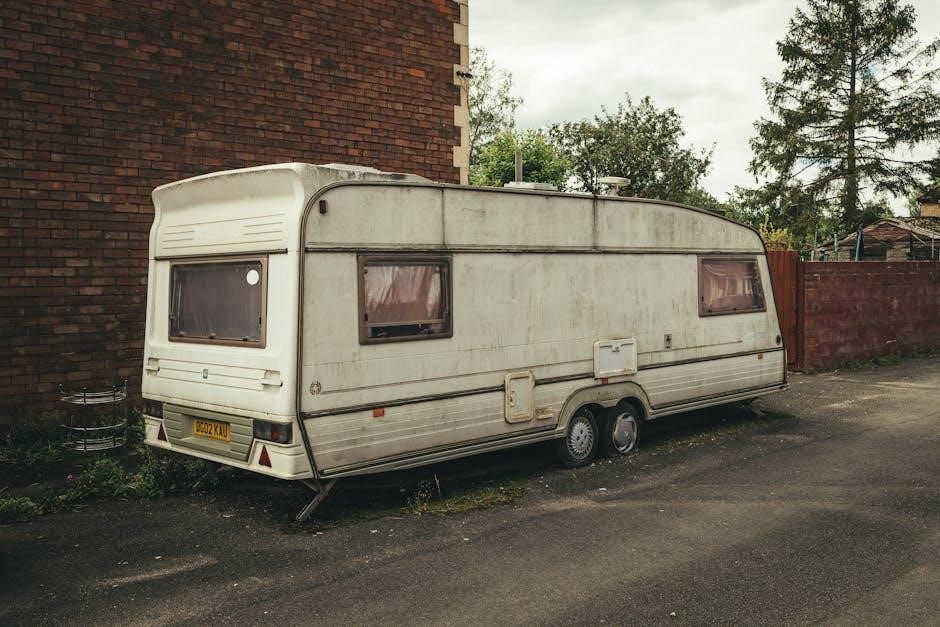
While Parkers doesn’t offer a dedicated touring caravan price guide, understanding market values relies on comprehensive resources like the National Caravan Guide (NCG) and Glass’s Guide. These tools assess popular models – Bailey, Swift, and Elddis are frequently sought after – based on age, condition, and features.
Values for used touring caravans fluctuate significantly. A well-maintained, newer model (2020-2024) from a reputable brand could range from £18,000 to £30,000+, depending on berth and specification. Older models (pre-2010) typically fall between £5,000 and £12,000. AutoTrader provides a useful comparison point, showcasing current listings and sale prices for similar caravans, aiding in realistic valuation expectations.
Remember, condition is paramount; a caravan with damp or significant damage will command a substantially lower price.

Static Caravans (Holiday Homes) – Valuation Differences
Parkers does not specifically cover static caravan (holiday home) valuations; their focus remains primarily on touring and motor caravans. Valuing static caravans differs significantly due to their location and site fees. Unlike touring models, static caravans depreciate more rapidly, heavily influenced by park rules and leasehold agreements.
Values range widely, from £15,000 for older, basic models to £60,000+ for newer, luxury lodges. The NCG and specialized holiday home valuation services are crucial. Factors like park location, demand, and included extras (decking, landscaping) heavily impact price.
Unlike touring caravans, resale isn’t always straightforward; parks often have control over sales and may charge commission.
Motor Caravans (Campervans) – A Separate Market
Parkers’ coverage of motor caravans (campervans) is distinct from touring caravan guides, reflecting a separate market with unique valuation drivers. Campervan prices are influenced by the base vehicle (e.g., Fiat, Mercedes) and the conversion quality. Like cars, mileage and mechanical condition are paramount.
Values span from £20,000 for basic conversions to over £80,000 for high-spec models with advanced features. Glass’s Guide provides industry-standard valuations for motor caravans, considering both vehicle and conversion aspects. AutoTrader is useful for comparing similar models.
Demand for campervans surged recently, impacting used prices; however, depreciation follows automotive trends.

Tips for Buyers & Sellers
While Parkers isn’t a primary caravan pricing source, utilize AutoTrader for comparable listings and negotiate based on condition and market demand.
Negotiating the Best Price
Successfully negotiating a caravan price demands thorough preparation, and while a dedicated “Parkers caravan price guide” isn’t a central resource, leveraging multiple sources is key. Begin by researching similar models on AutoTrader and other online marketplaces to establish a realistic market value.
Be prepared to justify your offer based on the caravan’s age, condition, mileage, and any included equipment. Don’t hesitate to point out any necessary repairs or cosmetic imperfections to support a lower price. Remember that dealers often use guides like Glass’s or the National Caravan Guide for valuations, so understanding these benchmarks is beneficial.

A polite yet firm approach, coupled with a willingness to walk away, can often yield the best results. Consider the time of year – demand fluctuates, impacting pricing.
Understanding Depreciation
Caravan depreciation, like vehicles, is a significant factor in determining value, though a specific “Parkers caravan price guide” doesn’t singularly define it. Generally, caravans experience the most substantial depreciation in their first few years, losing a considerable percentage of their original price.
Age, condition, and usage heavily influence this decline. Well-maintained caravans with low mileage will depreciate slower; Static caravans (holiday homes) often depreciate differently than touring models. Understanding that market values are constantly shifting is crucial;

Resources like the National Caravan Guide and Glass’s Guide provide insights into typical depreciation curves for various models. Recognizing these trends empowers both buyers and sellers to make informed decisions regarding fair pricing.