A meticulously designed private road maintenance agreement template represents a crucial investment for any community sharing road access, fostering clarity and preventing future conflicts.
Establishing clear responsibilities, a just funding system, and addressing legal aspects safeguards property values and ensures long-term road usability for all stakeholders involved.
Utilizing a customizable PDF template, like those offered by US Legal Forms or Fraser Dodd, streamlines the creation of a legally sound and easily accessible document.
What is a Private Road Maintenance Agreement?
A Private Road Maintenance Agreement is a legally binding contract between property owners who share access to a private road. Unlike publicly maintained roads funded by taxes, these roads require a collaborative approach to upkeep and repair, formalized through this agreement.
Essentially, it’s a roadmap for shared responsibility, outlining how costs for grading, snow removal, pothole filling, and other necessary maintenance will be managed. The agreement, often documented as a private road maintenance agreement PDF, details each owner’s financial obligations and rights regarding the road’s use.
This document isn’t just about money; it defines the scope of maintenance, establishes procedures for decision-making, and provides a framework for resolving disputes. A well-drafted agreement protects each owner’s investment and ensures the road remains accessible and safe for everyone, preventing costly legal battles down the line. It’s a proactive measure for a harmonious community.
Why is a Written Agreement Necessary?
Oral agreements regarding road maintenance are notoriously unreliable, leading to misunderstandings, disputes, and ultimately, neglected roads. A clearly defined, written private road maintenance agreement PDF provides crucial legal protection for all property owners involved.
Without a formal agreement, determining fair contribution amounts, enforcing maintenance responsibilities, or resolving conflicts becomes incredibly difficult and expensive. A written document establishes a clear record of agreed-upon terms, preventing ambiguity and providing a solid basis for enforcement.
Furthermore, a documented agreement protects property values by ensuring the road remains properly maintained. It demonstrates responsible ownership and can be essential when selling property. Utilizing a template ensures all critical aspects are addressed, promoting accountability and preventing future legal issues, making it a vital investment for any shared road community.

Key Components of a Private Road Maintenance Agreement
Essential elements within a private road maintenance agreement PDF include identifying parties, defining the road, outlining maintenance duties, and establishing financial contributions for upkeep.
Identifying the Parties Involved
Clearly defining all property owners benefiting from the private road is paramount within the private road maintenance agreement PDF. This section must explicitly list each landowner’s name, address, and parcel identification number (PIN) associated with the road’s access.
The agreement should also specify if any entities, such as homeowner associations (HOAs) or trusts, hold ownership interests. Accurate identification prevents ambiguity regarding responsibility and ensures all stakeholders are legally bound by the agreement’s terms.
Furthermore, detailing the legal capacity in which each party enters the agreement – individual, joint tenants, etc. – is crucial for enforceability. A well-defined list of parties establishes a clear chain of accountability for road maintenance obligations and financial contributions, minimizing potential disputes.

Defining the Private Road
Within the private road maintenance agreement PDF, a precise and unambiguous definition of the “Private Road” is essential. This goes beyond simply stating the road’s name; it requires a detailed legal description, potentially referencing recorded plats or surveys.
The description should clearly delineate the road’s beginning and ending points, width, and any specific features like culverts, bridges, or drainage ditches included within the maintenance scope. Including a map or exhibit visually illustrating the road’s boundaries is highly recommended.
This precise definition avoids disputes over which sections of the road are subject to the agreement. It clarifies the extent of maintenance responsibilities and ensures all parties share a common understanding of the road’s physical parameters, bolstering the agreement’s legal soundness.
Scope of Maintenance Responsibilities
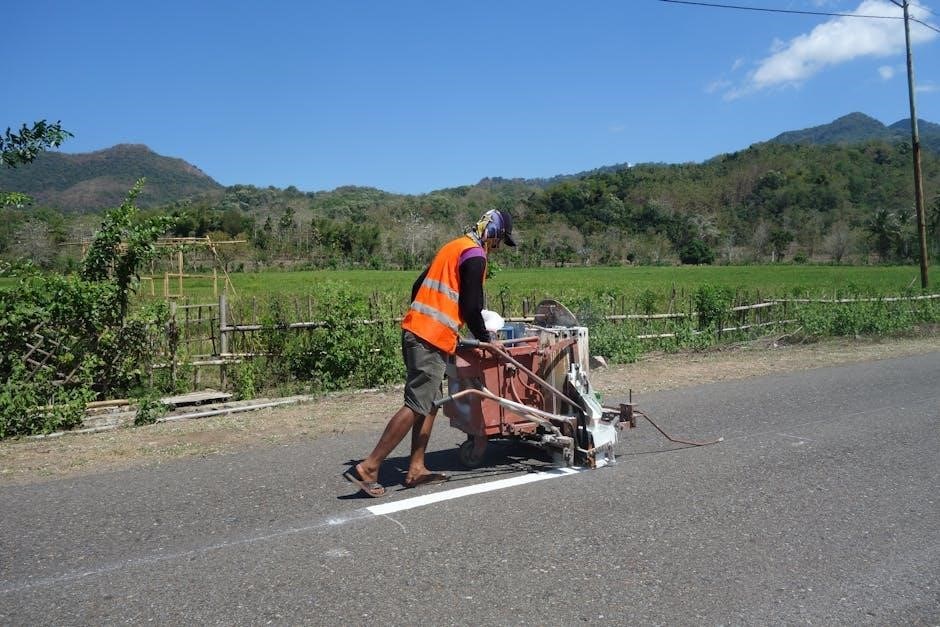
The private road maintenance agreement PDF must meticulously detail the specific maintenance tasks covered. This section should comprehensively list responsibilities such as grading, gravel replacement, snow removal, vegetation control, ditch cleaning, and repair of potholes or washboards.
Clearly defining the scope prevents disagreements about who is responsible for what. It should also specify the standard of maintenance – for example, how often grading will occur or the acceptable level of snow accumulation before removal.
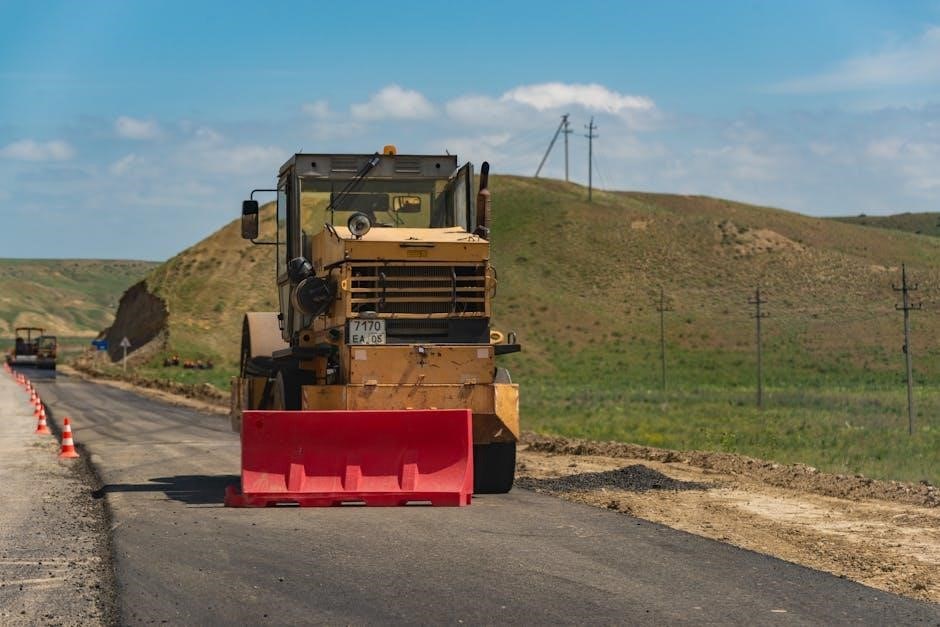
Furthermore, the agreement should address major repairs, like bridge or culvert replacement, distinguishing them from routine maintenance. Specifying whether these require special assessments or are covered by regular contributions is crucial for transparency and avoiding financial disputes amongst property owners.

Financial Aspects of Road Maintenance
A private road maintenance agreement PDF necessitates a defined funding mechanism, outlining contribution amounts, payment schedules, and procedures for special assessments for significant repairs.
Establishing a clear financial structure ensures adequate funds for upkeep and prevents disputes regarding cost allocation among property owners utilizing the shared roadway.
Establishing a Funding Mechanism
The private road maintenance agreement PDF must detail a robust funding mechanism to ensure consistent financial resources for upkeep. Common approaches include proportionate contributions based on property frontage, acreage, or usage.
A dedicated bank account, solely for road maintenance, is highly recommended, providing transparency and accountability. The agreement should specify who manages these funds and the process for authorizing expenditures.
Consider establishing annual or quarterly assessments, clearly outlining the due dates and potential penalties for late payments. The PDF template should allow for easy modification of these amounts as costs fluctuate.
Furthermore, the agreement should address the possibility of unforeseen expenses, such as emergency repairs, and how these will be funded – potentially through a reserve fund or special assessments. A well-defined funding structure is paramount for long-term road sustainability.
Contribution Amounts and Payment Schedules
The private road maintenance agreement PDF should meticulously define how contribution amounts are calculated. Common methods include equal shares among property owners, or allocation based on frontage, acreage, or assessed property value.
Clearly outlining the calculation method within the PDF prevents disputes; Payment schedules must also be specified – annual, quarterly, or monthly installments are typical. Include precise due dates and acceptable payment methods (check, online transfer, etc.).

Late payment penalties, if any, should be clearly stated, along with procedures for addressing non-payment. The PDF template should allow for easy adjustments to contribution amounts as maintenance costs change.
Regular review of these amounts, perhaps during annual meetings, ensures fairness and adequate funding. A transparent and well-documented system fosters cooperation and responsible road maintenance.
Special Assessments for Major Repairs
The private road maintenance agreement PDF must address unforeseen major repairs – repaving, significant drainage work, or emergency fixes. These typically exceed regular maintenance budgets, necessitating special assessments.
The PDF should detail the process for initiating a special assessment: a proposal outlining the repair, estimated costs, and a voting procedure. A clear threshold for approval (e.g., majority vote, two-thirds) is crucial.
Payment schedules for special assessments should be defined, potentially allowing for installment plans to ease the financial burden on owners. The PDF should also specify consequences for non-payment of these assessments, potentially including liens on properties.
Transparency is key; detailed records of assessment costs and expenditures must be maintained and accessible to all property owners, fostering trust and accountability within the community.

Legal Considerations and Dispute Resolution
The private road maintenance agreement PDF should clarify easement rights, insurance obligations, and establish a clear process for resolving disputes via mediation or arbitration.
Addressing these legal aspects proactively minimizes potential conflicts and protects the interests of all property owners involved in the shared road maintenance.
Easement Rights and Access
The private road maintenance agreement PDF must meticulously define the easement rights granted to each property owner, explicitly outlining their legal right to access and utilize the shared private road.
Specifically, the agreement should detail the scope of these rights – whether they encompass ingress, egress, and the ability to utilize the road for all lawful purposes related to their property.
Furthermore, it’s crucial to clearly state any limitations on these rights, such as restrictions on vehicle types, weight limits, or prohibitions against commercial use, ensuring equitable access for all.
The document should also address potential scenarios involving the termination or transfer of easement rights, outlining procedures for ensuring continued access for remaining property owners.
A well-defined section on easement rights within the PDF minimizes ambiguity and prevents future disputes regarding road access and usage, safeguarding property values and neighborly relations.
Insurance Requirements
A comprehensive private road maintenance agreement PDF should explicitly address insurance requirements to protect property owners from potential liabilities arising from road usage and maintenance activities.
The agreement should specify the types of insurance coverage required, such as general liability insurance, to cover accidents or injuries occurring on the private road.
Furthermore, it should outline minimum coverage amounts, ensuring adequate financial protection for all parties involved, and designate who is responsible for obtaining and maintaining the insurance policies.
Consideration should be given to requiring proof of insurance annually, with provisions for addressing lapses in coverage or non-compliance with the agreement’s stipulations.
Clearly defining insurance obligations within the PDF template mitigates financial risks and fosters a secure environment for all property owners utilizing the shared private roadway.
Dispute Resolution Process (Mediation/Arbitration)
A well-structured private road maintenance agreement PDF must incorporate a clear dispute resolution process to address disagreements efficiently and avoid costly litigation.
The agreement should initially mandate mediation, a non-binding process where a neutral third party facilitates negotiations between disputing parties, encouraging a mutually agreeable solution.
If mediation fails, the PDF should outline a binding arbitration process, where a neutral arbitrator hears evidence and renders a final, enforceable decision.
Specifying the location of arbitration, the selection process for the arbitrator, and the allocation of arbitration costs are crucial elements for a fair and transparent process.
Including such a clause within the private road maintenance agreement promotes amicable resolutions and protects the interests of all property owners involved, preventing prolonged conflicts.

Agreement Administration and Enforcement
The private road maintenance agreement PDF requires annual meetings for review, diligent record-keeping, defined amendment procedures, and consistent enforcement of established terms.
Effective administration ensures transparency and accountability, while robust enforcement safeguards the agreement’s integrity and protects all property owners’ investments.
Annual Meetings and Record Keeping
Regular annual meetings, as stipulated within the private road maintenance agreement PDF, are vital for fostering community involvement and collaborative decision-making regarding road upkeep.
These gatherings provide a forum for owners to assess the easement’s condition, discuss necessary repairs, and vote on proposed maintenance plans, ensuring everyone has a voice.
Comprehensive record-keeping is equally crucial; detailed minutes of these meetings, along with financial records documenting contributions and expenditures, should be meticulously maintained.
This documentation serves as a transparent audit trail, demonstrating responsible financial management and providing evidence of adherence to the agreement’s terms.
Maintaining accurate records also facilitates smoother dispute resolution and protects the interests of all property owners involved in the shared road maintenance responsibilities.
A well-organized system of record-keeping, accessible to all parties, builds trust and strengthens the long-term viability of the private road maintenance arrangement.
Amendment Procedures
The private road maintenance agreement PDF should clearly outline a formal process for making amendments, recognizing that circumstances and needs may evolve over time.
Typically, amendments require a specified level of agreement among the property owners, often a supermajority vote, to ensure broad consensus and prevent unilateral changes.
The procedure should detail how proposed amendments are submitted, circulated for review, and ultimately voted upon, ensuring transparency and fairness for all stakeholders.
Any amendments must be documented in writing, formally adopted, and appended to the original agreement, creating a clear and updated record of the governing terms.
A robust amendment process safeguards against arbitrary alterations and ensures the agreement remains relevant and effective in addressing the ongoing needs of the community.
Clearly defined procedures promote stability and prevent disputes arising from unclear or improperly executed modifications to the private road maintenance agreement.
Enforcement of Agreement Terms
The private road maintenance agreement PDF must address how violations of its terms will be handled, ensuring accountability and maintaining the integrity of the agreement.
Typically, the initial step involves a written notice to the non-compliant property owner, outlining the violation and providing a reasonable timeframe for correction.
If the issue persists, the agreement should specify recourse options, such as levying fines, withholding services, or pursuing legal action – like mediation or arbitration.
Clearly defining these enforcement mechanisms deters non-compliance and provides a structured process for resolving disputes fairly and efficiently.
The PDF should also outline who bears the costs associated with enforcement, preventing financial burdens on compliant property owners.
Consistent and impartial enforcement is crucial for upholding the agreement’s terms and preserving the long-term viability of the private road maintenance arrangement.
PDF Template Considerations
Selecting a private road maintenance agreement PDF template requires attention to customization, legal compliance, and security features like digital signatures for ease and validity.
Customization Options for PDF Templates
PDF templates for private road maintenance agreements should offer substantial customization to reflect the unique characteristics of each road and its users.
Essential customizable fields include identifying the specific parties involved – landowners, associations, or relevant entities – and a precise definition of the private road itself, detailing its boundaries and length.
Furthermore, the template must allow for tailored adjustments to the scope of maintenance responsibilities, outlining tasks like grading, snow removal, vegetation control, and repair of potholes or drainage issues.
Financial sections require customization for contribution amounts, payment schedules, and provisions for special assessments to cover major repairs or unexpected expenses.
Finally, the ability to modify dispute resolution processes and amendment procedures ensures the agreement remains relevant and enforceable over time, adapting to changing circumstances.
Ensuring Legal Compliance of the PDF
To guarantee legal validity, a private road maintenance agreement PDF must adhere to relevant state and local laws regarding easements, property rights, and contract formation.
The template should explicitly address easement rights and access, clearly defining the rights of each property owner to use the road and any limitations associated with those rights.
Insurance requirements are crucial; the agreement should specify the types and amounts of insurance coverage each party must maintain, protecting against liability for accidents or damages.
Consultation with legal counsel is highly recommended to review the customized agreement and ensure it complies with all applicable regulations in the specific jurisdiction.
Proper execution, including signatures from all parties and clear dates, is essential for enforceability, alongside provisions for recording the agreement with the relevant county authorities.
Digital Signatures and PDF Security
Employing digital signatures on a private road maintenance agreement PDF enhances security and streamlines the signing process, offering a legally recognized method of authentication.
Platforms like Adobe Sign or DocuSign provide secure environments for collecting signatures, ensuring the document’s integrity and preventing unauthorized alterations.
PDF security features, such as password protection and permission controls, can restrict access to authorized parties only, safeguarding sensitive information within the agreement.
Consider utilizing digital certificates to verify the identity of signatories, adding an extra layer of trust and accountability to the agreement’s execution.
Maintaining a secure audit trail of all signature and access events is vital for demonstrating compliance and resolving potential disputes regarding the agreement’s validity.