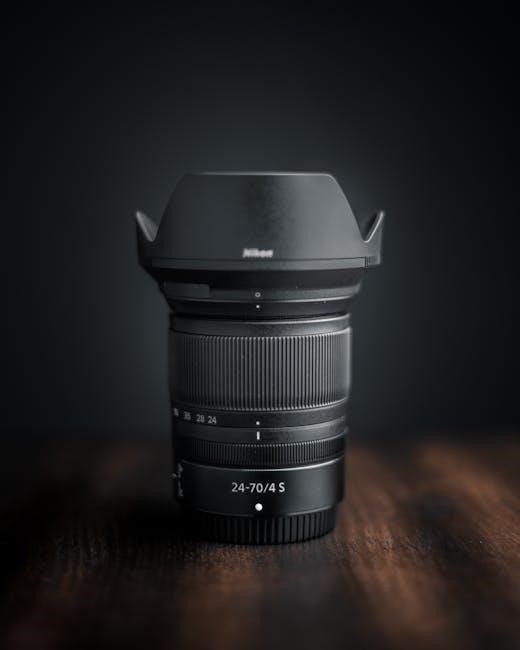
The Nikon D3300 is a user-friendly DSLR, ideal for beginners. Its manual assumes default settings, offering a gateway into photography with detailed guidance.
What is the Nikon D3300?
The Nikon D3300 is a digital single-lens reflex (DSLR) camera designed as an excellent entry point into the world of professional-quality photography. This camera, as detailed within its operating manual, prioritizes ease of use without sacrificing image quality. It’s a versatile tool for capturing stunning photos and exploring creative possibilities.
The manual emphasizes that the explanations provided are based on default settings, making it accessible for newcomers. It’s a camera built for learning, offering a solid foundation for understanding photographic principles. Whether you’re interested in landscapes, portraits, or wildlife, the D3300 provides the tools to bring your vision to life, as outlined in its comprehensive documentation.
Key Features and Specifications
The Nikon D3300 boasts a 24.2-megapixel DX-format CMOS sensor, delivering high-resolution images with exceptional clarity. Its manual details the Expeed 4 image processing engine, contributing to reduced noise and enhanced detail. The camera features 11-point autofocus for accurate subject tracking, crucial for capturing sharp photos.
Key specifications include Full HD 1080p video recording at up to 60fps, and an ISO range of 100-25600 for versatile shooting in various lighting conditions. The 3.0-inch tilting LCD screen facilitates comfortable viewing from different angles. Connectivity options, as described in the manual, include built-in Wi-Fi for easy image sharing. It’s a compact and lightweight DSLR, perfect for travel and everyday use.
Getting Started
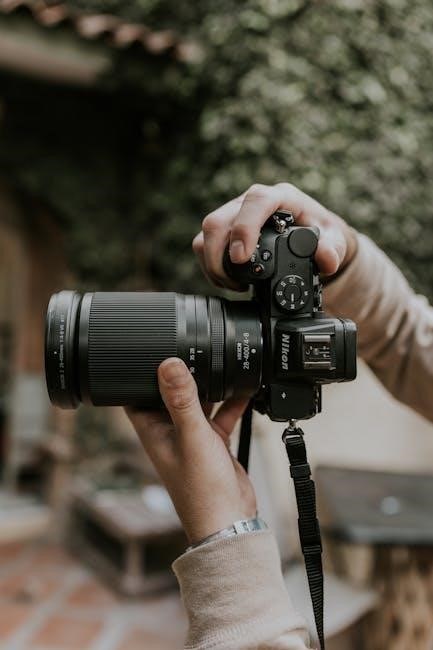
Begin your journey with the Nikon D3300! The manual guides you through unboxing, setup, and familiarizing yourself with essential controls for immediate use.
Unboxing and Initial Setup
Welcome to the Nikon D3300 experience! Upon unboxing, carefully inspect the contents: the camera body, a kit lens (typically 18-55mm), battery, battery charger, USB cable, and documentation, including the comprehensive user manual. Before proceeding, ensure all components are present and undamaged.
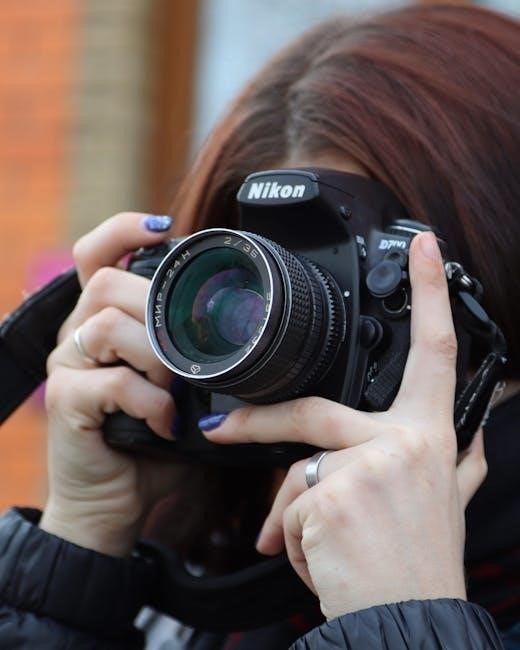
Initial setup involves charging the battery fully using the provided charger. While charging, take the time to read the “For Your Safety” section within the manual – it’s crucial for understanding important safety precautions. Once charged, power on the camera and follow the on-screen prompts to set your language, date, and time. The manual provides step-by-step instructions for this initial configuration, ensuring a smooth and straightforward process. Familiarize yourself with the camera’s basic layout as you progress through the setup.
Inserting the Battery and Memory Card
Powering your Nikon D3300 begins with correctly inserting the battery. Locate the battery compartment on the camera’s bottom. Unlock the latch and insert the battery, ensuring the contacts align properly. Securely close the latch to prevent accidental dislodgement. The manual details this process with clear diagrams.
Next, insert a compatible SD memory card into the designated card slot, also found on the camera’s bottom. Gently push the card in until it clicks into place. Avoid forcing it. The camera requires a memory card to store your photos and videos. Refer to the manual for supported SD card types and capacities. Proper insertion is vital for reliable data storage and camera operation. Always eject the card safely before removing it.
Basic Camera Controls and Buttons
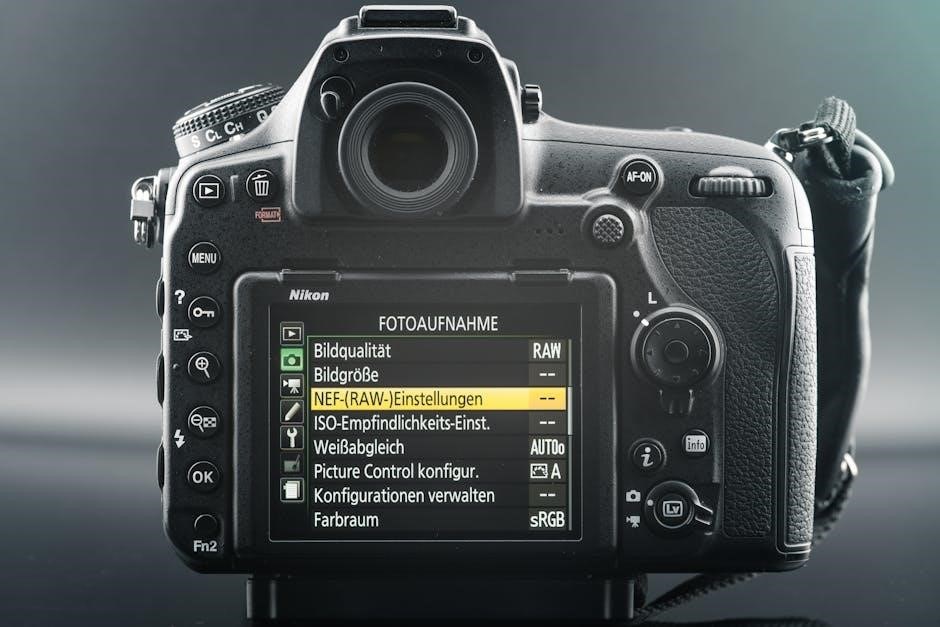
Familiarizing yourself with the Nikon D3300’s controls is crucial. The power switch activates the camera, while the shutter button captures images. The mode dial selects shooting modes – Auto, Program, Aperture-priority, Shutter-priority, and Manual. The manual provides detailed explanations of each mode.
The directional pad navigates menus and selects focus points. The ‘i’ button provides quick access to frequently used settings. The control dial adjusts settings like aperture and shutter speed, depending on the selected mode. Understanding these basic controls, as outlined in the operating manual, unlocks the camera’s full potential. Practice using each button and dial to become comfortable with their functions, enhancing your photographic experience.

Understanding Shooting Modes
The D3300 offers various shooting modes, from fully automatic for simplicity to manual for complete control, detailed within the operating manual’s guidance.
Auto Mode for Beginners
Auto mode on the Nikon D3300 simplifies photography for newcomers. The camera automatically selects optimal settings for aperture, shutter speed, ISO, and white balance, ensuring well-exposed images in most situations. This mode is perfect for those unfamiliar with photographic principles, allowing them to focus on composition and capturing the moment.
The operating manual emphasizes that Auto mode prioritizes ease of use, making it an excellent starting point for learning. While offering minimal control, it delivers consistently good results, particularly in well-lit conditions. Users can confidently point and shoot, letting the D3300 handle the technical aspects. It’s a fantastic way to build confidence and explore photographic creativity without being overwhelmed by complex settings.
Program Mode (P) – Semi-Automatic Control
Program (P) mode on the Nikon D3300 offers a balance between automatic convenience and creative control. The camera sets both aperture and shutter speed, but allows the user to adjust other settings like ISO, white balance, and exposure compensation. This mode is ideal for photographers who want a degree of influence over the final image without manually controlling every aspect.
The manual highlights that Program mode is a stepping stone from Auto, providing more flexibility. Users can fine-tune exposure using the exposure compensation dial, brightening or darkening images as needed. It’s a great option for situations where Auto mode doesn’t quite deliver the desired results, offering a semi-automatic approach to photography.
Aperture-Priority Mode (A/Av) – Controlling Depth of Field
Aperture-Priority (A/Av) mode on the Nikon D3300 empowers photographers to control the depth of field – the area of the image that appears sharp. You select the aperture (f-stop), and the camera automatically determines the appropriate shutter speed for correct exposure. A wider aperture (lower f-number, like f/1.8) creates a shallow depth of field, blurring the background and isolating the subject.
Conversely, a narrower aperture (higher f-number, like f/16) yields a greater depth of field, keeping more of the scene in focus. The manual explains this mode is excellent for portraits or landscapes. Understanding aperture is key to artistic expression, and A/Av mode provides direct control over this crucial element.
Shutter-Priority Mode (S/Tv) – Controlling Motion
Shutter-Priority (S/Tv) mode on the Nikon D3300 allows you to dictate the shutter speed, while the camera calculates the corresponding aperture for proper exposure. This mode is invaluable for capturing or freezing motion. A fast shutter speed (e.g., 1/1000s) freezes action, ideal for sports or wildlife photography, preventing blur.
Conversely, a slow shutter speed (e.g., 1/30s) creates motion blur, conveying a sense of movement, perfect for waterfalls or light trails. The D3300 manual highlights that careful consideration of shutter speed is vital for achieving the desired effect. Mastering this mode unlocks creative possibilities for dynamic imagery.
Manual Mode (M) – Full Control
Manual (M) mode on the Nikon D3300 grants photographers complete control over both aperture and shutter speed. This mode, detailed in the camera’s manual, requires understanding the interplay between these settings and ISO to achieve correct exposure. It’s ideal for challenging lighting conditions where automatic modes struggle.
In M mode, you independently adjust aperture for depth of field and shutter speed for motion control. The camera’s light meter assists in determining proper exposure, but the final decision rests with the photographer. Mastering Manual mode unlocks ultimate creative freedom, allowing precise control over every aspect of the image.
Focusing and Exposure
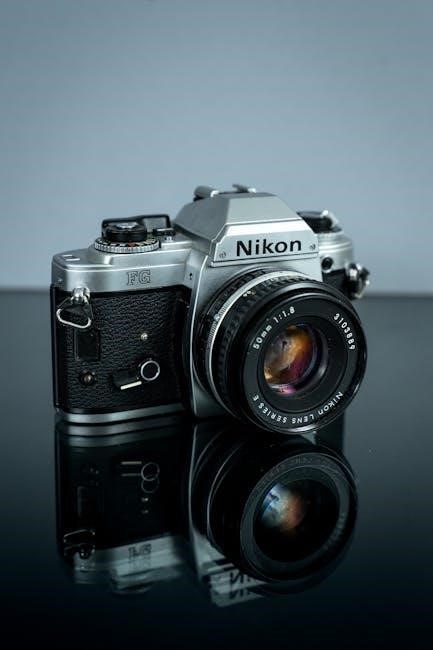
Focusing and exposure are crucial elements. The D3300 manual details autofocus modes, focus points, and understanding aperture, shutter speed, and ISO for optimal results.
Autofocus Modes and Focus Points
The Nikon D3300 offers several autofocus (AF) modes to suit various shooting scenarios. Understanding these modes is key to capturing sharp images. Single-point AF is ideal for stationary subjects, allowing precise focus point selection. Continuous AF tracks moving subjects, maintaining focus as they move within the frame. Auto-area AF lets the camera automatically select focus points, suitable for general photography.
The D3300 features 11 focus points strategically positioned across the frame. These points can be selected individually or in groups, providing flexibility in focusing. The manual explains how to navigate the focus point selection process using the camera’s controls. Mastering these settings ensures accurate focus, even in challenging conditions, and contributes significantly to overall image quality. Experimenting with different modes and points is encouraged to find what works best for your specific needs.
Understanding Exposure: Aperture, Shutter Speed, and ISO
Exposure is crucial for well-lit photographs, controlled by aperture, shutter speed, and ISO. Aperture (f-stop) controls the lens opening, affecting depth of field – a wider aperture (lower f-number) creates shallow depth, blurring backgrounds. Shutter speed determines how long the sensor is exposed to light; faster speeds freeze motion, while slower speeds allow more light but can cause blur.
ISO measures the sensor’s sensitivity to light. Lower ISO values (e.g., 100) produce cleaner images, while higher values (e.g., 3200) are useful in low light but introduce noise. The D3300 manual details how these settings interact. Balancing these three elements is key to achieving proper exposure. Understanding their relationship empowers you to creatively control the look and feel of your images.
Exposure Compensation
Exposure compensation allows you to fine-tune the brightness of your images, overriding the camera’s automatic metering. If your photos are consistently too dark, use positive compensation (+1, +2, etc.) to brighten them. Conversely, if they’re too bright, use negative compensation (-1, -2, etc.) to darken them.
The Nikon D3300 manual explains how to access and adjust this feature. It’s particularly useful in challenging lighting situations, like snow scenes (which can trick the camera into underexposing) or backlit subjects. Mastering exposure compensation gives you greater control over the final result, ensuring your images accurately reflect your artistic vision. Experimenting with different values will help you understand its impact.
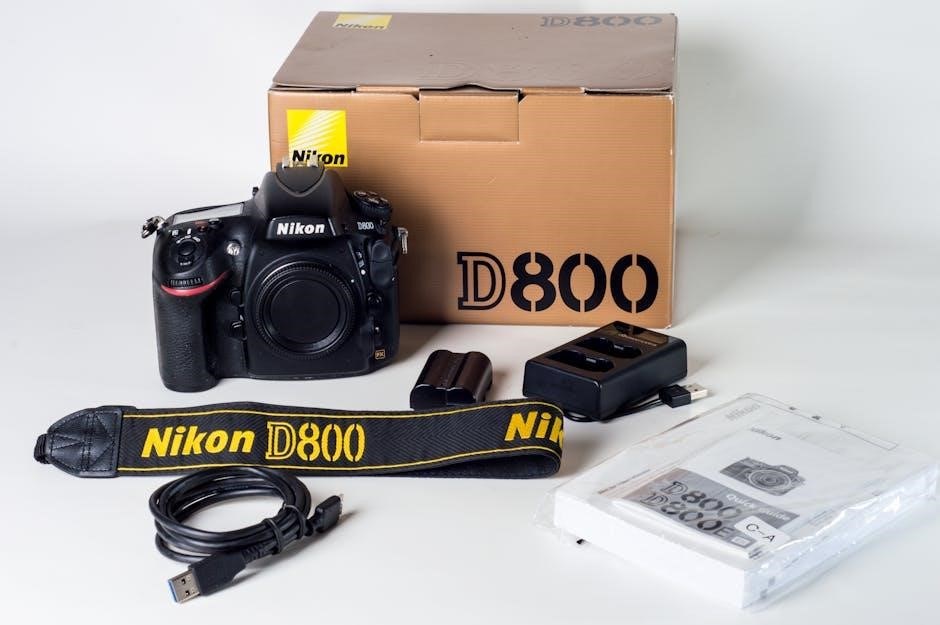
Image Quality and Settings
The D3300 manual details settings for image size, quality, and white balance. Picture Control options allow customization of tone and color reproduction.
Image Size and Quality Settings
The Nikon D3300 manual comprehensively explains image size and quality settings, crucial for balancing file size and detail. Users can select from Large, Medium, and Small image sizes, impacting the number of photos stored on the memory card.
Quality options include Fine, Normal, and Basic, determining the level of JPEG compression. Fine provides the highest quality with larger file sizes, while Basic offers the smallest files with some loss of detail. The manual clarifies RAW (NEF) image capture, offering maximum editing flexibility but requiring post-processing.
Understanding these settings allows photographers to optimize image quality for their specific needs, whether prioritizing storage space or maximum detail for printing or editing. The manual guides users through choosing the appropriate combination for various shooting scenarios.
White Balance Adjustment
The Nikon D3300 manual details white balance adjustment, vital for accurate color rendition. It explains how different light sources (sunlight, shade, tungsten, fluorescent) affect color temperature. The camera offers preset white balance modes for common conditions, ensuring natural-looking colors.
Users can also utilize custom white balance, allowing precise adjustment by metering a white or gray card. This is particularly useful in challenging lighting situations. The manual clarifies the ‘Kelvin’ setting, enabling manual temperature control for creative effects.
Understanding white balance is key to avoiding color casts and achieving accurate, pleasing images. The guide provides clear instructions on selecting and fine-tuning white balance for optimal results in diverse shooting environments.
Picture Control Settings
The Nikon D3300 manual thoroughly explains Picture Control settings, allowing users to customize image appearance. These presets – Standard, Neutral, Vivid, Monochrome – influence contrast, sharpness, and saturation. Each control offers adjustable parameters for personalized results.
The manual details how to create and save custom Picture Controls, tailoring the camera’s output to individual preferences or specific shooting scenarios. Users can fine-tune sharpness, contrast, brightness, saturation, and hue.
Understanding Picture Controls empowers photographers to achieve desired aesthetics directly in-camera, reducing post-processing needs. The guide provides practical examples and guidance on selecting and modifying these settings for optimal image quality.

Advanced Features
The Nikon D3300 manual details features like the built-in flash, video recording, and computer connectivity for image transfer, expanding creative possibilities.
Using the Built-in Flash
The Nikon D3300’s built-in flash is a versatile tool for enhancing your photography in various lighting conditions. The operating manual provides comprehensive instructions on utilizing this feature effectively. You can activate the flash in several modes: Auto, Auto with Red-Eye Reduction, Fill-Flash, Slow Sync, and Manual.
Understanding each mode is crucial for achieving desired results. Auto mode lets the camera decide when flash is needed, while Fill-Flash brightens subjects in already well-lit scenes; Slow Sync combines flash with a slower shutter speed, useful for capturing both subject and background detail in low light. The manual details how to adjust flash compensation for fine-tuning brightness and offers guidance on minimizing red-eye effects. Proper flash usage significantly improves image quality, especially indoors or in challenging lighting scenarios.
The Nikon D3300 offers Full HD 1080p video recording capabilities, allowing you to capture moving moments with clarity. The operating manual details the process, starting with selecting the “Movie” mode on the mode dial. It explains how to adjust settings like frame rate (24p, 25p, or 30p) and microphone sensitivity for optimal audio.
Understanding exposure settings during video recording is vital; aperture, shutter speed, and ISO all impact the final result. The manual guides users on achieving proper exposure and utilizing autofocus modes for smooth, focused footage. It also covers limitations, such as recording time constraints and potential overheating during extended sessions. Mastering these basics unlocks the D3300’s potential for creating high-quality videos.
Connecting to a Computer and Transferring Images
The Nikon D3300 connects to computers via USB, enabling seamless image transfer. The operating manual details the process, emphasizing the need for Nikon’s ViewNX-i software (or compatible alternatives) for optimal organization and editing. It explains how to select the appropriate connection mode on the camera – typically “Mass Storage Device” or “MTP”.
The manual guides users through locating transferred images on their computer and offers troubleshooting tips for connection issues. It also highlights the benefits of using Nikon Transfer 2 for automated image downloading and organization. Proper disconnection procedures are outlined to prevent data corruption. Following these steps ensures a smooth workflow from capture to post-processing.
Troubleshooting Common Issues
The Nikon D3300 manual addresses issues like the camera not powering on, focusing problems, and error messages, offering solutions for smooth operation.
Camera Not Turning On
If your Nikon D3300 fails to power on, several factors could be at play. First, ensure the battery is correctly inserted and fully charged. A depleted or improperly seated battery is a common culprit. Consult the manual for proper battery installation instructions.
Next, verify the battery contacts within the camera compartment are clean and free from any obstructions. Dust or debris can hinder the connection. If the issue persists, try a different, known-working battery to rule out a faulty power source.
Additionally, check the power switch position; it must be fully engaged. The Nikon D3300 operating manual also suggests checking the memory card door is securely closed, as a faulty sensor can prevent startup. Finally, if none of these steps resolve the problem, professional servicing may be required.
Focusing Problems
Experiencing focusing issues with your Nikon D3300? The Nikon D3300 operating manual details several troubleshooting steps. First, confirm you’ve selected an appropriate autofocus (AF) mode for your subject – Single-servo AF (AF-S) for stationary objects, and Continuous-servo AF (AF-C) for moving ones.
Ensure the focus point is positioned directly over your intended subject. Utilize the camera’s autofocus-point selection options to achieve precise focus. Low light conditions can also hinder autofocus performance; consider using the built-in flash or increasing ISO.
If shooting through glass or a reflective surface, autofocus may struggle. Try manually focusing in such scenarios. Finally, verify your lens is clean and properly attached. Refer to the manual for detailed guidance on AF settings and manual focus techniques.
Error Messages and Solutions
Encountering error messages on your Nikon D3300? The Nikon D3300 operating manual provides a comprehensive list and corresponding solutions. Common errors include “Card full” (insert a new memory card), “Card error” (reformat the card or try a different one), and “Lens error” (ensure the lens is securely attached and compatible).
If you receive a general error, try turning the camera off and on again, or removing and reinserting the battery. The manual details specific troubleshooting steps for each error code displayed.
For persistent errors, consult the Nikon support website or contact customer service. Always note the exact error message displayed for accurate assistance. Refer to the manual’s index for quick access to error-related information.