
The Comprehensive Guide to “Walking Through the World of Math” (PDF)
This PDF offers an enlightening journey into mathematics, presenting concepts in an accessible manner. It’s designed to improve problem-solving skills and cognitive function, blending theory with practical application.
Understanding the Core Concepts
“Walking Through the World of Math” isn’t simply a collection of formulas; it’s a pathway to grasping the fundamental principles that underpin mathematical thought. The PDF emphasizes that mathematics is an art of problem-solving, requiring a shift in perspective from rote memorization to analytical thinking.
It delves into how regular physical activity, specifically walking, directly correlates with improved cognitive function – a crucial element for successful mathematical exploration. Walking boosts blood flow, enhancing brain activity and making complex concepts more approachable. The material highlights that consistent engagement with mathematical problems, coupled with a healthy lifestyle, fosters a deeper understanding.
The core concepts aren’t presented in isolation; rather, they’re interwoven with real-world applications, demonstrating the relevance of mathematics in everyday life. This approach aims to demystify the subject and encourage a more intuitive grasp of its principles, making the learning process both effective and enjoyable.
What is “Walking Through the World of Math”? — An Overview
“Walking Through the World of Math” (PDF) is an introductory course designed to cultivate the art of mathematical problem-solving. Spanning 869 pages and 3MB in size, it’s more than just a textbook; it’s a comprehensive guide aimed at making mathematics accessible and engaging for a broad audience. The material emphasizes that understanding isn’t about memorizing steps, but about developing a flexible and analytical mindset.
The PDF uniquely connects mathematical learning with the benefits of physical activity, specifically walking. It acknowledges that a healthy body supports a healthy mind, and that regular walks can improve cognitive function, lower blood pressure, and boost energy levels – all vital for tackling mathematical challenges.
It’s presented as a resource for anyone seeking to enhance their mathematical abilities, regardless of their current skill level, offering a blend of theoretical explanations and practical exercises.
Target Audience and Skill Level
“Walking Through the World of Math” (PDF) caters to a diverse audience, encompassing individuals of all ages and fitness levels – mirroring the accessibility of walking itself. While presented as an introduction to mathematical problem-solving, the PDF doesn’t presuppose advanced prior knowledge. It’s suitable for students seeking to reinforce foundational concepts, or for anyone desiring a refresher and a new perspective on mathematical thinking.
The material is designed to be versatile, accommodating both beginners and those with some existing mathematical background. The emphasis on building problem-solving skills means it’s valuable for anyone wanting to improve their analytical abilities, regardless of their chosen field.
The PDF’s connection to physical activity suggests it also appeals to those interested in holistic well-being, recognizing the link between physical health and cognitive performance.

Benefits of Engaging with the Material
This PDF boosts mathematical skills, enhances cognitive function, and promotes heart health – mirroring the benefits of walking. It’s a holistic learning experience!

Improved Mathematical Problem-Solving Skills
“Walking Through the World of Math” (PDF) is meticulously crafted to cultivate and refine problem-solving abilities. The material doesn’t simply present formulas; it emphasizes the art of mathematical thinking. Through a combination of clear explanations, illustrative examples, and progressively challenging exercises, users develop a deeper understanding of core concepts.
The PDF encourages a strategic approach to tackling mathematical challenges, moving beyond rote memorization. It fosters the ability to analyze problems, identify relevant information, and apply appropriate techniques. This course introduces the fundamentals of problem solving, preparing individuals for more advanced mathematical pursuits. Regular engagement with the practice problems and solutions provided within the PDF solidifies these skills, building confidence and competence. Ultimately, this resource empowers learners to approach mathematical problems not with apprehension, but with a sense of curiosity and capability.
Enhanced Cognitive Function and Brain Health
“Walking Through the World of Math” (PDF) isn’t just about numbers; it’s a workout for your brain! Engaging with mathematical concepts actively stimulates cognitive function, improving memory, focus, and analytical skills. The PDF’s exercises require sustained mental effort, strengthening neural pathways and promoting overall brain health.
Furthermore, the principles within align with the benefits of physical walking – improved blood flow and oxygen delivery to the brain. Studies demonstrate that regular mental stimulation, like that provided by this resource, can help lower the risk of cognitive decline. By consistently challenging your mind with mathematical problems, you’re investing in long-term cognitive well-being. The PDF’s approach fosters a growth mindset, encouraging continuous learning and adaptation, further bolstering brain plasticity and resilience.
Real-World Applications of Mathematical Principles
“Walking Through the World of Math” (PDF) doesn’t confine mathematics to abstract theory; it emphasizes its pervasive presence in everyday life. The resource demonstrates how mathematical principles underpin countless real-world scenarios, from financial planning and engineering to art and music.
By understanding these connections, learners develop a more practical and applicable skillset. The PDF illustrates how concepts like geometry are crucial in architecture, algebra in coding, and number theory in cryptography. This approach fosters a deeper appreciation for the subject and its relevance beyond the classroom. It empowers individuals to approach real-world problems with a logical and analytical mindset, making informed decisions and navigating complex situations with greater confidence. The PDF bridges the gap between theoretical knowledge and practical application, showcasing mathematics as a powerful tool for understanding and interacting with the world around us.

Key Topics Covered in the PDF
The PDF explores arithmetic, geometry, and algebraic thinking, alongside the surprising connection between cardiovascular health – specifically walking – and enhanced cognitive abilities.
Cardiovascular Health and Walking
The “Walking Through the World of Math” PDF uniquely integrates the benefits of physical activity, specifically walking, with mathematical learning. Walking is presented not just as a healthy habit, but as a facilitator for cognitive function, directly impacting one’s ability to grasp mathematical concepts.
As a cardiovascular exercise, walking demonstrably increases heart rate, improving blood flow and potentially lowering blood pressure – benefits repeatedly highlighted in related health resources. This enhanced circulation delivers vital oxygen to the brain, boosting energy levels and releasing endorphins, which positively influence mood.
The PDF emphasizes that consistent, brisk walking isn’t merely about physical wellbeing; it’s about optimizing the brain for learning. The faster, farther, and more frequent the walks, the greater the cognitive advantages, creating a more receptive state for tackling mathematical challenges. Improved sleep quality, another benefit of walking, further contributes to enhanced cognitive performance.
Basic Arithmetic and Number Theory
The “Walking Through the World of Math” PDF lays a foundational groundwork in basic arithmetic, progressing to the intricacies of number theory. It doesn’t simply present formulas, but aims to cultivate an intuitive understanding of numbers and their relationships. The material begins with core operations – addition, subtraction, multiplication, and division – building confidence through practical examples.

Number theory concepts, such as prime numbers, factors, and multiples, are introduced in a clear and accessible manner, avoiding overly complex jargon. The PDF emphasizes problem-solving strategies, encouraging readers to think critically and apply their knowledge to diverse scenarios. It’s designed to move beyond rote memorization, fostering a deeper appreciation for the logic and beauty inherent in mathematical structures.
The approach is intended to be enlightening, transforming what can often be a daunting subject into an engaging exploration of fundamental mathematical principles, preparing learners for more advanced topics.
Geometry and Spatial Reasoning
Within the “Walking Through the World of Math” PDF, geometry and spatial reasoning are presented not as abstract concepts, but as tools for understanding the world around us. The material begins with fundamental shapes – lines, angles, and polygons – and progresses to more complex figures like circles and three-dimensional objects;
Emphasis is placed on developing spatial visualization skills, enabling readers to mentally manipulate shapes and understand their properties. Concepts like area, volume, and symmetry are explored through practical examples and real-world applications. The PDF encourages a hands-on approach, prompting readers to visualize and construct geometric figures.
It aims to build a strong intuitive grasp of spatial relationships, fostering problem-solving abilities in areas like measurement, design, and navigation. The goal is to transform geometry from a potentially intimidating subject into an engaging and accessible exploration of spatial logic.

Algebraic Thinking and Equation Solving

The “Walking Through the World of Math” PDF introduces algebraic thinking as a powerful method for representing and solving problems. It moves beyond rote memorization of rules, focusing instead on understanding the underlying principles of algebraic manipulation. The material begins with the concept of variables and expressions, building towards the formulation and solution of equations.
Emphasis is placed on developing a conceptual understanding of equality and the operations that preserve it. Readers are guided through various techniques for solving linear and quadratic equations, with a focus on logical reasoning and problem-solving strategies. The PDF utilizes real-world scenarios to illustrate the practical applications of algebra.
It aims to empower readers to translate verbal descriptions into mathematical equations and confidently solve for unknown quantities, fostering a deeper appreciation for the elegance and utility of algebraic thinking.

Utilizing the PDF for Effective Learning
To maximize learning, actively read, take detailed notes, and diligently work through practice problems with provided solutions. Supplement with external resources!
Strategies for Active Reading and Note-Taking
Engaging with the “Walking Through the World of Math” PDF requires more than passive reading. Employ active reading techniques such as highlighting key concepts, formulating questions as you progress, and summarizing sections in your own words. Don’t just read what is written, but actively consider why it’s presented that way.
Effective note-taking is crucial. Instead of simply copying text, focus on capturing the core ideas and relationships between them. Utilize methods like mind mapping or the Cornell note-taking system to organize information visually. Include examples and diagrams to reinforce understanding. Regularly review your notes, expanding upon them with additional insights or connections to other mathematical concepts.
Furthermore, attempt to anticipate upcoming topics based on the current material. This proactive approach enhances comprehension and retention. Finally, don’t hesitate to revisit challenging sections multiple times until clarity is achieved. Consistent effort yields substantial rewards.
Practice Problems and Solutions
The “Walking Through the World of Math” PDF isn’t solely theoretical; it’s reinforced by a robust set of practice problems designed to solidify understanding. These problems progressively increase in difficulty, mirroring the learning curve and building confidence. Each chapter culminates in exercises that test comprehension of the core concepts presented.
Crucially, the PDF provides detailed solutions for every problem. These aren’t merely answers, but step-by-step explanations demonstrating the reasoning and techniques involved. Studying these solutions is as important as attempting the problems themselves. Analyze where you struggled and compare your approach to the provided solution.
Don’t be discouraged by initial difficulties. Embrace mistakes as learning opportunities. Repeated practice, coupled with careful analysis of the solutions, is the key to mastering the material and developing strong mathematical problem-solving skills. Consistent effort is paramount.
Supplementing the PDF with Additional Resources
While the “Walking Through the World of Math” PDF provides a comprehensive foundation, enhancing your learning journey with external resources is highly recommended. Explore online platforms offering interactive exercises and video tutorials to reinforce concepts presented in the PDF. Websites dedicated to mathematical problem-solving can offer diverse challenges and alternative approaches.
Consider joining online forums or study groups where you can discuss problems, share insights, and learn from peers. Engaging with others fosters a deeper understanding and provides valuable perspectives. Don’t limit yourself to solely digital resources; textbooks and workbooks can offer supplementary explanations and practice opportunities.
Remember, learning mathematics is an active process. Combining the PDF’s structured content with diverse external resources will maximize your comprehension and accelerate your progress.
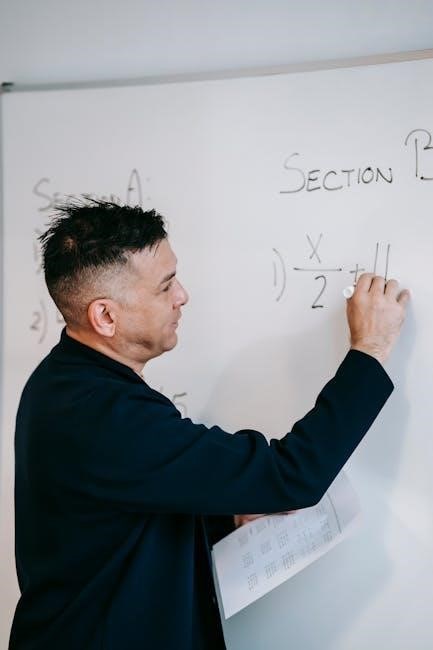
The Physical and Mental Benefits of Walking (Related to Cognitive Enhancement)
Walking boosts energy, improves mood, lowers blood pressure, and enhances cognition – all beneficial while engaging with the mathematical concepts within the PDF.
Walking’s Impact on Blood Pressure and Heart Health
Engaging with “Walking Through the World of Math” is significantly enhanced when paired with regular physical activity, particularly walking. Numerous studies demonstrate a strong correlation between walking and improved cardiovascular health. As a cardiovascular exercise, walking directly increases your heart rate, leading to improved blood circulation throughout the body. This increased blood flow helps to lower blood pressure, reducing the strain on your heart and decreasing the risk of heart disease.
The PDF’s mathematical challenges require focused cognitive effort, and a healthy heart ensures optimal oxygen delivery to the brain, supporting this mental exertion; Consistent walking also contributes to lowering high cholesterol levels, further protecting your heart. Integrating even a brisk daily walk alongside studying the PDF’s concepts can create a synergistic effect, benefiting both your mental acuity and physical well-being. Remember, the faster, farther, and more frequently you walk, the greater the cardiovascular benefits you’ll experience, ultimately aiding your comprehension and enjoyment of the mathematical material.
Boosting Energy Levels and Mood Through Walking
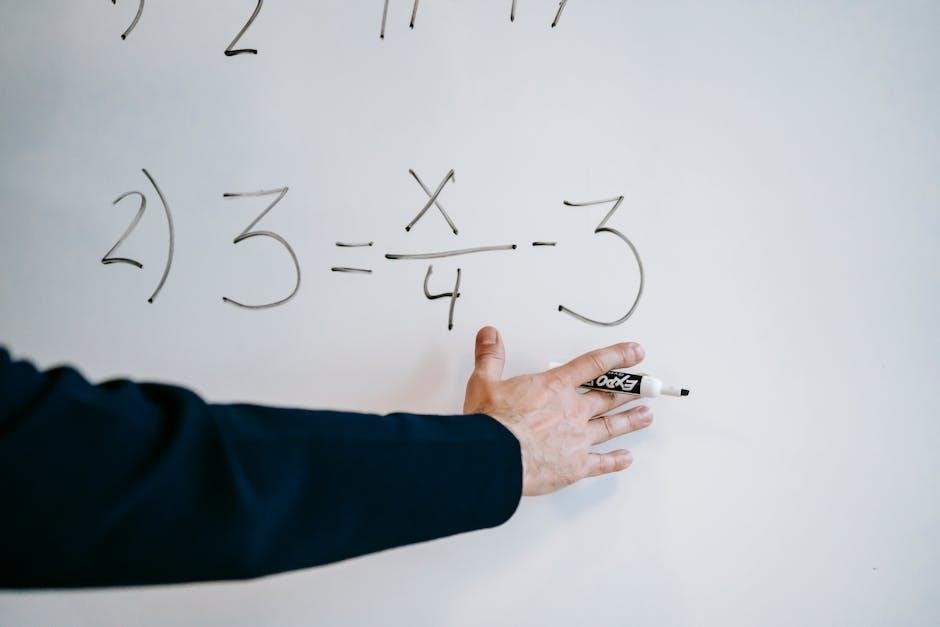
Tackling the complexities within “Walking Through the World of Math” demands sustained mental energy and a positive mindset. Fortunately, regular walking provides a natural and effective boost to both. Physical activity, like walking, triggers the release of endorphins – hormones known to elevate mood and reduce stress. This can be particularly beneficial when grappling with challenging mathematical concepts, fostering a more optimistic and receptive learning environment.
Furthermore, walking enhances energy levels by improving oxygen delivery throughout the body. This increased oxygenation directly impacts brain function, sharpening focus and concentration – crucial for absorbing and retaining the PDF’s information. A brisk walk before or during study breaks can combat mental fatigue and revitalize your cognitive abilities. Combining the intellectual stimulation of the PDF with the invigorating effects of walking creates a powerful synergy, promoting both academic success and overall well-being. It’s a simple yet profound way to optimize your learning experience.
Walking and Improved Sleep Quality
Successfully navigating “Walking Through the World of Math” requires a well-rested mind, capable of absorbing and processing complex information. Consistent walking plays a significant role in achieving improved sleep quality, indirectly enhancing your ability to learn and retain mathematical concepts presented in the PDF. Regular physical activity helps regulate your body’s natural sleep-wake cycle, promoting more consistent and restorative sleep patterns.
Moreover, walking can reduce stress and anxiety – common culprits behind sleepless nights. By calming the nervous system and releasing tension, it prepares your mind and body for restful sleep. Prioritizing sleep alongside your study of the PDF ensures optimal cognitive function, allowing you to approach mathematical challenges with clarity and focus. A well-rested brain is a more efficient and effective learning tool, maximizing the benefits derived from the material. It’s a holistic approach to academic success.